
Mass Spectrometry
Identifies unknown compounds and molecular structures by converting samples into ions and measuring their mass-to-charge ratios.
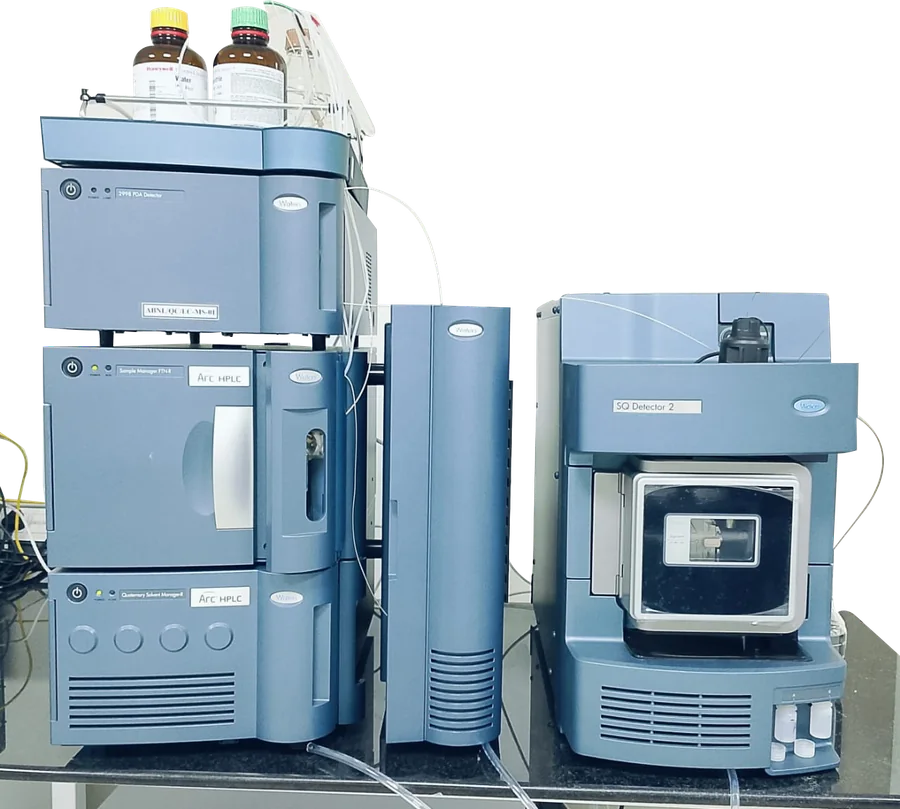
Mass spectrometry is a powerful analytical technique used to identify unknown compounds, quantify known materials and study molecular structures through mass-to-charge ratios.
The process converts samples into gaseous ions, which are measured for their relative abundance and molecular weight.
How it works
Ion formation
Samples are ionised using energy to create charged particles for accurate molecular measurement.
Detection
Ions are separated and detected based on their mass-to-charge ratio (m/z).
Ion sources
ESI and APCI probes support analysis of both polar and non-polar compounds.
The mass spectrum displays the relative abundance of ions against their mass-to-charge ratios, helping confirm compound identity and structure.
At a glance
| Ion sources | ESI · APCI |
|---|---|
| Output | Relative abundance vs m/z |
| Service | Molecular weight & structure confirmation |
Have a sample or a complex analytical question?
Share your requirement and our scientists will come back with the right technique, timeline and quotation.